Anjouan Casino Licence in the UK: What It Means
 Available in GB

An Anjouan licence is issued outside the UK and does not itself show that a casino has UKGC permission to serve Great Britain.
Table of Contents
- What an Anjouan Licence Means for UK Players
- The Scope and Limits of an Anjouan Casino Licence
- How Anjouan Online Casinos Differ from UK-Regulated Sites
- Bonus Terms and Withdrawal Conditions
- Complaints and Disputes Under Anjouan’s Framework
- Casino Sites: Payments and Payout Conditions
- Assessing Newly Launched Anjouan Casinos
- Crypto Payments at Anjouan Casinos
- What Casino Reviews Can and Cannot Establish
What an Anjouan Licence Means for UK Players
An Anjouan casino licence refers to a gambling service associated with a regulator outside the UK. For someone in Great Britain, that label does not mean the casino is authorised by the UK Gambling Commission (UKGC). The distinction is between the jurisdiction connected with a site’s licence and the regulatory permission required to offer gambling to customers in the British market.
A non-UK-regulated casino is an online gambling site operating without UKGC oversight. It may present a licence issued elsewhere, including in Anjouan, but that does not place its operations under the UK regulator. The name of a foreign licensing jurisdiction and the site’s availability to someone in Britain are therefore not, by themselves, evidence that the operator has permission to serve that market.
The operator’s location does not determine the requirement
The relevant UK requirement concerns the service being offered, rather than where a company is based. An operator serving customers in Great Britain must hold a UKGC licence even if its headquarters, servers or other business operations are located abroad. A licence from another jurisdiction does not replace that requirement.
For a UK-focused search involving Anjouan casino licences, check the operator’s current licensing and availability details before choosing. The verdicts below stick to the information available for each entry.
1. x3bet
Payout speed: 1-3 business days x3bet lists a payout speed of 1–3 business days. This is the available detail relevant to the payment experience.
2. NightLuck
Payout speed: 1-3 business days NightLuck lists a payout speed of 1–3 business days. This is the available detail relevant to the payment experience.
3. BeOnBet
Payout speed: 1-3 business days BeOnBet lists a payout speed of 1–3 business days. This is the available detail relevant to the payment experience.
4. WinBeast
Payout speed: 1-3 business days WinBeast lists a payout speed of 1–3 business days. This is the available detail relevant to the payment experience.
5. Revery Play
Payout speed: 1-3 business days Revery Play lists a payout speed of 1–3 business days. This is the available detail relevant to the payment experience.
6. Amunbet
Payout speed: 1-3 business days Amunbet lists a payout speed of 1–3 business days. This is the available detail relevant to the payment experience.
7. Zombillion
Payout speed: 1-3 business days Zombillion lists a payout speed of 1–3 business days. This is the available detail relevant to the payment experience.
8. Jetsetspins
Payout speed: 1-3 business days Jetsetspins lists a payout speed of 1–3 business days. This is the available detail relevant to the payment experience.
9. Dieselwin
Payout speed: 1-3 business days Dieselwin lists a payout speed of 1–3 business days. This is the available detail relevant to the payment experience.
10. NightWin
Payout speed: 1-3 business days NightWin lists a payout speed of 1–3 business days. This is the available detail relevant to the payment experience.
This distinction matters when interpreting claims that a casino is “licensed”. The word may refer to an authorisation connected with another jurisdiction, not a UKGC operating licence. In the context of Anjouan casinos, the existence of an Anjouan licence should not be read as proof that the operator is authorised to offer gambling in Great Britain. Those are separate questions: one concerns the jurisdiction associated with the licence; the other concerns permission to serve the British market.
The UKGC’s role is tied to operators supplying gambling services in Great Britain. Consequently, a site’s overseas base does not remove the licensing requirement if it serves customers there. Nor does an overseas licence convert an operator without the required UK authorisation into a UK-regulated casino.
Operator responsibility and player liability are different
The legal framework distinguishes the conduct of gambling businesses from that of individual customers. The Gambling Act 2005 places the relevant licensing obligations on operators that provide gambling services into the UK market. Its focus is not on prosecuting individual players simply for using a gambling service licensed in another country.
UK law does not expressly bar British citizens from using gambling services licensed abroad. A player who gambles on a site without a UK licence does not, on that basis alone, commit a criminal offence under UK law. That point concerns the player’s liability; it does not establish that the operator is authorised to serve Great Britain.
UK Casinos Without a UKGC Licence: Rules and Risks
These propositions can coexist without contradiction. An individual may not face criminal liability merely for using an overseas service, while the operator may still be outside the UKGC system and lack the licence required to serve the British market. The absence of a player offence should not be mistaken for approval of the operator’s conduct or for an extension of UK regulatory protections to the site.
The same distinction applies to the phrase “available to UK players”. A website being accessible from Britain does not demonstrate that its operator holds the necessary UKGC licence. Accessibility describes whether the service can be reached; authorisation concerns whether the operator is permitted to supply gambling services in the market. They are not interchangeable.
What the Anjouan label establishes—and what it does not
For a casino presenting an Anjouan licence, the label points to an association with an overseas licensing jurisdiction. It does not, on its own, establish that the casino is regulated by the UKGC or authorised to serve Great Britain. The specific terms and reach of an Anjouan authorisation are separate matters from the UK licensing requirement.
Accordingly, “Anjouan-licensed” and “UK-licensed” should not be treated as alternative descriptions of the same status. A casino may identify itself with an Anjouan licence while remaining a non-UK-regulated casino. The latter description means that it operates without oversight from the UKGC; it does not imply that the site is necessarily inaccessible to British users, nor does accessibility settle its regulatory position.
Regulatory Status
An Anjouan licence does not mean a casino is authorised by the UK Gambling Commission (UKGC) to serve the British market.
For a UK player, the central distinction is therefore institutional. A foreign licence concerns the regulator or jurisdiction associated with the operator. A UKGC licence is the permission required for an operator serving customers in Great Britain. The first does not supply the second, and the player’s lack of criminal liability does not change the operator’s obligation. This provides the legal context for assessing what an Anjouan casino licence represents without confusing a foreign licensing claim with authorisation to operate in the British market.
The Scope and Limits of an Anjouan Casino Licence
An Anjouan casino licence is a jurisdiction-specific authorisation, not a passport that allows an operator to offer gambling wherever it chooses. Its reach is bounded by the markets covered by the licensing framework and by any restrictions that apply to the operator. In particular, the licence does not authorise operation in the United Kingdom or in other listed restricted markets. A casino’s possession of an Anjouan licence therefore cannot, by itself, establish that it is permitted to serve customers in every country where its website can be accessed.
That distinction matters because a licence can be relevant to an operator’s status in the jurisdiction that issued it while having no effect on permission to operate elsewhere. The presence of an Anjouan licence on a website should not be read as evidence of approval by another country’s regulator. Nor does the wording “licensed” settle whether the operator is authorised to serve a particular market: that question depends on the rules governing that market, not simply on the location named in the casino’s licensing claim.
Curacao Casino Licence in the UK: Rules and Limits
The licence’s regulatory significance also depends on what the framework requires. Anjouan’s framework does not mandate random number generator testing, independent audits or the segregation of player funds. These are distinct forms of oversight. RNG testing concerns the systems used to produce game outcomes; audits examine an operator’s records or controls; segregation concerns whether customer money is kept apart from the operator’s own funds. Since the framework does not require these measures, the licence alone cannot establish that they have taken place or that player funds are held separately.
This is a limit on what can be inferred from the licence, rather than proof that a particular casino’s games are unfair or that its finances are unsound. The absence of a framework requirement does not establish what an individual operator does in practice. Equally, a casino’s statement about its own testing, audits or handling of funds is not the same as a requirement imposed by the licensing framework. Those claims need to be distinguished from what the licence itself guarantees.
The distinction between an individual operator’s conduct and the framework’s requirements is central to assessing Anjouan-licensed casinos. A licence may identify the regulatory basis on which a site presents itself, but it does not automatically verify every operational claim the site makes. Where a claim concerns testing or auditing, the existence of the licence is not evidence that the relevant work was independently completed. Where a claim concerns the treatment of customer money, the licence does not itself provide assurance of segregation.
The same caution applies to the scope of the authorisation. A casino may use an Anjouan licence to describe its regulatory status, but that description does not extend the licence into a restricted market. The licence does not override market-specific requirements or create permission beyond its stated reach. Its relevance must therefore be assessed in relation to the jurisdiction that issued it and the markets in which the operator intends to provide services.
Licensing Limits
An Anjouan licence does not mandate random number generator testing, independent audits, or the segregation of player funds.
For a casino described as Anjouan-licensed, the practical question is not only whether the licence exists, but what the licence can establish. It may identify the operator’s claimed licensing basis; it does not demonstrate that every feature of the business has been tested, audited or protected through segregated funds. Nor does it confer authority to operate in the United Kingdom or in other listed restricted markets. Treating those questions separately avoids giving the licence a broader meaning than its framework supports.
The term “Anjouan casino licence” can therefore describe a real element of an operator’s regulatory position without resolving every question about its operations. The licence’s boundaries are material: it does not provide universal market access, and the framework does not require several forms of independent oversight that might otherwise support confidence in games or fund handling. Conclusions about a casino should not be drawn from the licensing label alone. The label has a defined but limited scope, and claims beyond that scope require separate evidence.
How Anjouan Online Casinos Differ from UK-Regulated Sites
The practical difference between Anjouan-licensed casinos and UK-regulated sites is not limited to the name of the regulator. It affects which safeguards are required, whether a shared self-exclusion scheme applies and what routes are available if a player needs help. The precise arrangements can vary between operators, so the existence of an Anjouan casino licence should not be taken as evidence that a particular UK-style protection is in place.
Self-exclusion does not carry across
Casinos outside the UK Gambling Commission’s system are not part of GamStop, the UK-wide self-exclusion scheme. An exclusion set through GamStop therefore does not provide a barrier to accessing those sites. Anjouan-licensed casinos are not required to connect to the scheme, and a player who has excluded themselves through it should not assume that this choice will be recognised by an operator under a different framework.
Casino no ID verification in the UK: what it means
This is a practical difference, not simply a technical one. A shared exclusion system can help someone avoid returning to participating gambling sites by applying the restriction across them. Without integration, the responsibility for any restriction may rest with the individual operator, and its effect may be confined to that operator’s own service.
Responsible-gambling safeguards may be less demanding
UK-regulated operators are subject to mandatory responsible-gambling requirements. At non-UK-regulated casinos, responsible-gambling rules may be less stringent, and the same mandatory tools cannot be assumed. This means that features such as deposit limits and self-exclusion should not be treated as standard protections simply because a site describes itself as responsible or displays a licence.
The distinction is between a tool being mentioned and a tool being required, available and effective. A site may describe its own controls, but that alone does not show that they match the protections required of UK-licensed operators. Nor does an Anjouan licence establish that a particular control is present. The available safeguard needs to be assessed as an operator-specific feature rather than inferred from the jurisdiction named in the licence.
This gap matters most when gambling becomes difficult to control. A player using an offshore service does not have the same access to the mandatory responsible-gambling tools associated with UK-regulated play. GamStop is also unavailable as a shared exclusion mechanism for these sites. These limitations do not establish that every operator lacks every form of support; they do mean that the UK framework cannot be presumed to apply.
Do
- Check for specific operator-led deposit limits
- Assess individual self-exclusion tools
- Review site-specific data protection policies
Don’t
- Assume GamStop restrictions apply
- Expect mandatory UK-style safeguards
- Presume UK regulatory framework governs the site
Data protection is another point of difference
Non-UK-regulated casinos may operate under less stringent data-protection rules than UKGC-licensed operators. That possibility warrants care when considering what personal information a site collects and how it handles it. It would be inaccurate, however, to infer from the jurisdiction alone that a particular operator mishandles data. The relevant point is that the UK regulatory framework should not be assumed to govern the site’s practices.
A licence label does not, by itself, describe the operator’s data procedures or establish that they match UK requirements. Where a casino’s privacy information is unclear, the extent of the protection cannot be established from the licence claim alone. This is a limit on what the licence indicates, rather than evidence that every Anjouan casino follows the same practices.
UK support routes may not be available
Playing at an offshore casino also changes the support available when gambling causes harm. The UK’s Financial Ombudsman Service and the mandatory responsible-gambling tools associated with UK-regulated operators are not available in the same way to someone using an offshore site. These should not be treated as back-up protections for play outside the UKGC system.
Safety & Regulation for UK Online Casinos
Taken together, the differences are about the reach and enforceability of safeguards, not a guarantee that every individual operator behaves identically. Anjouan online casinos are not required to integrate GamStop or to provide protections equivalent to those mandated for UK-licensed sites. Responsible-gambling and data-protection standards may also be less stringent. Those distinctions are material when assessing the protections available, even where a particular site advertises its own policies or controls.
Bonus Terms and Withdrawal Conditions
Anjouan casino bonuses should be assessed through their terms rather than the headline amount or number of free spins. Promotional funds can carry wagering requirements, expiry conditions and limits on the winnings that may be withdrawn. These conditions vary by offer, so figures reported for one promotion do not establish what another casino currently provides.
A specialist casino review has reported offshore welcome bonuses with wagering requirements of 35x or more. This is a reported example, not a standard that can be assumed to apply across Anjouan-licensed sites. The multiplier also needs to be read alongside its calculation base. A requirement might apply to the bonus alone or to the bonus and deposit together, producing different play-through obligations even when the displayed multiplier is identical.
A separate specialist review has described an offer with a 40x requirement applied to the bonus and deposit combined, while other offers may calculate it against the bonus alone or include bonus and free-spin funds together. The full promotional terms therefore matter more than the multiplier in isolation. If the calculation base is unclear, the practical amount of wagering required cannot be established from the headline figure.
Free spins can have distinct rules. One specialist review reports wagering requirements of 30–50 times the resulting winnings, alongside withdrawal caps of £5–£50. These are figures reported for particular offers, not confirmed conditions for every casino or promotion. A cap can restrict the amount withdrawn from free-spin winnings even where the displayed winnings are higher. The terms should clarify whether the cap concerns those winnings only and whether further wagering applies before withdrawal.
Bonus Considerations
- Wagering requirements can be 35x or more, sometimes applying to both bonus and deposit
- Free spin winnings may be subject to withdrawal caps between £5 and £50
- Promotional packages can expire quickly, often within 24–72 hours
- The promotional balance does not necessarily represent withdrawable cash
Expiry is another material condition. A specialist review describes free-spin packages that expire within 24–72 hours. That reported range should not be treated as a general deadline: the applicable period is the one stated in the particular offer. If spins are not used before expiry, the promotion may no longer be available, and any associated winnings may be subject to the offer’s own rules.
The distinction between bonus funds and withdrawable cash is important throughout. A balance shown after accepting an offer may include promotional value that remains restricted until wagering conditions are met. Where a promotion combines a deposit, bonus and free spins, separate rules may govern each component. The terms need to identify which games contribute towards wagering and whether a withdrawal request affects an active offer; without those details, the promotional balance alone does not show what can be withdrawn.
Promotional conditions can also be revised, so a general description of Anjouan casino bonuses cannot substitute for the terms attached to a specific offer at the time it is accepted. The relevant text should state the multiplier, its calculation base, the expiry date and any cap on winnings. Where these provisions are absent or ambiguous, the value of the promotion is difficult to assess reliably. A large advertised bonus does not, by itself, establish that the resulting balance will be available for withdrawal.
Malta MGA-Licensed Online Casinos in the UK
Complaints and Disputes Under Anjouan’s Framework
A complaint to a casino operating under an Anjouan gaming licence is initially a matter between the customer and the operator. The framework requires the operator to respond within 30 calendar days. That is a response deadline, not a guarantee that the complaint will be upheld, that the operator will offer a remedy, or that the underlying dispute will be settled within that period.
The distinction matters because a reply and an independent decision are not the same thing. An operator may acknowledge a complaint or explain its position without resolving the issue to the customer’s satisfaction. The stated response requirement does not, by itself, establish what remedy must be offered or how a disagreement about the response can be reviewed.
No regulator-led complaint decision
The Anjouan authority does not handle, mediate or adjudicate complaints from individual players. It therefore does not provide a route through which a player can ask the authority to investigate a particular case, weigh each side’s evidence and issue a decision on the dispute.
This limits the role of the Anjouan gaming licence in a complaint. The existence of a licence does not mean that the licensing authority will intervene in a disagreement about an account, a transaction or the application of the operator’s terms. Nor does the operator’s obligation to respond create an appeal to the authority if that response is disputed.
Casinos with an Anjouan licence also do not provide an independent dispute-resolution process comparable to the alternative dispute resolution services approved for UK Gambling Commission-licensed operators. A complaint may be raised with the casino, but there is no equivalent independent adjudicator within this framework to which the player can routinely escalate an unresolved case.
Complaint Process
The Anjouan authority does not handle, mediate, or adjudicate individual player complaints; it only requires operators to respond within 30 calendar days.
What the response requirement can establish
The 30-calendar-day requirement sets a defined expectation that the operator will respond. It should not be read as evidence that complaints are independently monitored or that the response will be accepted as fair by an outside body. The available framework distinguishes between the operator’s duty to reply and an independent process capable of determining whether its handling of the dispute was appropriate.
For that reason, the wording of a casino’s own complaints policy is significant. It can describe how the operator says complaints should be submitted and handled, but it cannot create Anjouan authority mediation where the framework provides none. Any internal review offered by a casino remains distinct from independent dispute resolution.
A clear record of the complaint and the operator’s replies can help establish what was raised and when. That record does not ensure a particular outcome, and it does not provide an external appeal mechanism. If the operator does not respond within the required period, or if its response leaves the central issue unresolved, the stated Anjouan process offers no regulator-led adjudication as a next step.
The practical position is therefore narrower than the term “licensed” may suggest in a dispute: the operator is required to respond within the specified period, but the Anjouan authority does not decide individual player complaints, and no comparable independent ADR route is provided. The licensing framework should not be mistaken for a promise of compensation, a binding ruling or an independent review of the operator’s decision.
VPN-Friendly Casinos UK: Access and Risks
Casino Sites: Payments and Payout Conditions
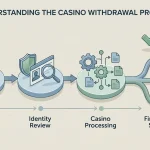
Payment arrangements at non-UK-regulated casinos can differ from those at UK-licensed sites. Deposits and withdrawals may face fewer restrictions, and some operators may process payouts more quickly. These are possible features of the arrangements, not guarantees that every payment will be accepted or released on the same terms.
For Anjouan casino sites, the available payment methods and conditions are set by each operator. A method shown for deposits should not be assumed to be available for withdrawals: casinos may apply separate rules to money entering and leaving an account. The payment page and withdrawal terms therefore need to be read together, with attention to any requirements that apply before a payout is authorised.
Published timing estimates also vary. Withdrawals at Casinos not on GamStop are often described as taking from 24 hours to five business days, with the method affecting the time. However, accounts of non-UK-regulated casinos also report that a payout can take as long as three or four weeks. The differing estimates mean that a stated processing window should not be treated as a fixed delivery date.
The transaction may involve more than the operator’s initial processing. The chosen payment provider, the casino’s checks and the route used to send funds can all affect when a withdrawal reaches its destination. If an operator places a transaction on hold, the payment method alone cannot resolve that delay.
A deposit option is therefore not evidence that the same route will support a withdrawal, nor that funds will be paid promptly. Before depositing, the operator’s current payment and withdrawal conditions should be considered together, including any stated processing stages and restrictions. Accounts held at a non-UK-regulated casino also sit outside UK Gambling Commission oversight, so a delay cannot be escalated through the Commission’s complaints process.
Withdrawal Timeframes
While some non-UK-regulated casinos are described as taking 24 hours to five business days for payouts, other accounts report that withdrawals can take as long as three or four weeks.
Assessing Newly Launched Anjouan Casinos
A recently launched casino may have little operating history to assess, so its Anjouan casino licence entry becomes an important point of scrutiny. The public register should be checked for an entry that corresponds to the site, rather than relying solely on a licence badge or a statement on the operator’s own pages. A displayed licence number is useful only if it can be matched to the relevant register record.
The company named in that record should also be compared with the legal entity identified in the casino’s terms and conditions. Differences in company names can make it unclear which entity is responsible for the service. The licence expiry date matters as well: an entry that cannot be found, does not match the operator, or appears expired does not establish that the site currently holds the stated authorisation.
These checks can establish whether the public details are consistent; they cannot demonstrate the quality of the casino’s day-to-day conduct or guarantee that funds will be returned. Anjouan-licensed casinos do not guarantee that player funds are kept separate from company money. If an operator fails, players are unsecured creditors, which means they do not have the protection of a claim backed by segregated funds.
A new brand may also have limited evidence of how it handles accounts and payments over time. That uncertainty is separate from whether its licence details appear in a register. A matching entry should therefore be treated as a verification point, not as proof that a new casino is financially secure or that a player can recover money if the business closes.
Online casinos with no sister sites in the UK
The distinction is particularly relevant when the operator has no substantial history of trading under the same company identity. Where the licence record, named company and stated expiry date do not align, the discrepancy should remain unresolved rather than being treated as a minor administrative detail. A newly launched site cannot acquire a record of reliable operation simply by displaying a licence claim.
Crypto Payments at Anjouan Casinos
Cryptocurrency is one payment option found at some non-UK regulated casinos, including sites operating under an Anjouan casino licence. Its use is relevant to the UK’s restriction on credit-card-funded gambling: crypto payments can bypass that ban. This describes a payment route, not an exemption from the rules governing operators that serve Great Britain.
The distinction is between how a payment is made and whether a casino is authorised to operate in the British market. A crypto deposit does not turn an Anjouan-licensed site into a UK Gambling Commission-licensed operator. Operators offering real-money gambling to customers in England, Scotland and Wales require the relevant UK licence, regardless of where the business is based.
Crypto transactions also do not make a casino’s payment terms uniform. The method may be supported for deposits, while the conditions for withdrawals are set separately by the operator. A deposit option alone should therefore not be treated as confirmation that the same asset, wallet route or process can be used to withdraw funds.
For an account funded with cryptocurrency, the operator’s terms remain central to understanding how transactions are handled. The value and movement of crypto can differ from conventional payment arrangements, while the Anjouan framework does not guarantee segregation of player funds. If an operator fails, players are unsecured creditors; using a digital asset does not change that position.
Unsecured Creditors
Because the Anjouan framework does not guarantee the segregation of player funds, players are considered unsecured creditors if an operator fails.
Crypto can therefore provide a way to fund gambling without using a credit card, but it does not remove the regulatory distinction between an Anjouan casino and a site licensed for Great Britain. Nor does the payment method itself establish that deposits will be recoverable or withdrawals completed. The legal status of the operator and the stated transaction terms remain separate considerations.
What Casino Reviews Can and Cannot Establish
Anjouan casino reviews can help describe how a site presents its services, what its published terms say and how reviewers assess its operation. They are evidence of an assessment, not proof that every customer will receive the same treatment. A review may reflect a particular point in time, while terms and procedures can change.
Withdrawal accounts illustrate this limitation. Published descriptions disagree: some report processing as fast as 24 hours to 5 business days, while others say a withdrawal can take three or four weeks. The longer period is not subject to a regulatory clock that compels the operator to act by a set deadline. Neither estimate establishes how a specific withdrawal will proceed; payment method, account checks and the operator’s handling of a case may all matter.
A specialist review has also reported that some operators may ask for notarised documents or a video call before releasing funds. That is a report about possible practice, not evidence that every Anjouan casino requires these steps. Reviews should therefore be read for the stated conditions and the limits of what has actually been observed, rather than treated as a promise about future payouts. Delays, further verification or a frozen account remain possible risks at a non-UK-regulated casino.
An independent review can document a complaint experience or assess whether the operator’s response appears consistent with its published terms. It cannot compel payment, change a casino’s decision or provide a formal regulatory ruling. A review site is not a regulator or a dispute-resolution body, and publishing a complaint does not create an official remedy. This distinction matters when accounts of a problem are used to assess a casino: they may offer useful detail, but they do not guarantee an outcome for another player or replace formal oversight.
Non-UKGC-Licensed Casinos: Rules and Risks
Anjouan Among Offshore Casino Licensing Jurisdictions
Anjouan is one of several jurisdictions associated with non-UK-regulated casinos. Malta, Curaçao and Gibraltar also appear among the places where such operators may be licensed. These jurisdictions should not be treated as interchangeable: each has its own licensing arrangements, and the jurisdiction named on a casino’s licence identifies its regulatory setting, not its permission to serve customers in Great Britain.
The central distinction for the British market is where a casino is licensed versus where it offers gambling services. An operator does not avoid the UK requirement by basing its business overseas or holding a licence from another jurisdiction. Operators serving customers in Great Britain must hold a licence from the UK Gambling Commission, irrespective of their location.
That rule applies across jurisdictions, rather than only to casinos licensed in Anjouan. A Malta, Curaçao or Gibraltar licence, like an Anjouan casino licence, is not a substitute for the relevant UK Gambling Commission authorisation when an operator serves Great Britain. The jurisdictional label alone therefore cannot establish that a site is authorised for this market.
The phrase “offshore casinos licensed in Anjouan” describes a category by the stated licensing jurisdiction, but it does not resolve whether an individual operator holds the authorisation required for Great Britain. The same distinction applies to non-UK based online casinos licensed elsewhere: overseas licensing and UK market authorisation are separate questions.
Anjouan’s position is best understood within this broader group of non-UK licensing jurisdictions, not as a special route around British requirements. For the regulatory status of a casino serving Great Britain, the relevant issue is whether the operator holds the required UK Gambling Commission licence. A licence from another jurisdiction does not, by itself, establish that status.
What happens if I have a dispute with an Anjouan-licensed casino as a UK player?
The Anjouan authority does not mediate or decide player complaints, and these casinos do not have to provide an independent dispute-resolution service comparable to UKGC-approved ADR. Under Anjouan’s framework, the operator must respond to a complaint within 30 calendar days.
What Are Non UK Regulated Casinos?
They are online gambling sites that operate without oversight from the UK Gambling Commission. They may be licensed in another jurisdiction, such as Anjouan, but that does not give them a UKGC licence.
Is an Anjouan casino licence legitimate?
An Anjouan licence is an authorisation associated with that overseas jurisdiction, but it does not authorise a casino to operate in the UK. It also does not provide UKGC oversight or guarantee player-fund segregation, independent dispute resolution, or mandatory RNG testing and audits.
What payment options are available at Non UK Casinos?
Non-UK-regulated casinos may accept credit cards, e-wallets, bank transfers and cryptocurrencies, often using alternative processors. Some also allow payments through a mobile phone bill or a prepaid balance.

Foreign Casinos for UK Players: Licensing and Risks
The guide explains what foreign status means in Britain and how licensing, safeguards, payments and...

International Casinos for UK Players: Licensing Explained
An overseas licence alone does not establish permission to serve Great Britain; compare access, safeguards,...

Offshore Casino Sites in the UK: Licensing Explained
The operator’s location is not enough to establish whether its service for British customers is...

Offshore Casinos for UK Players: Licensing and Risks
An offshore operator is defined by accepting British customers without the relevant UKGC licence, not...

British Casinos Not on GamStop: Rules and Risks
GamStop participation follows UKGC licensing, while access, bonus conditions and player safeguards can differ at...

Casino no ID verification in the UK: what it means
An account opened without an immediate document request does not show that age and identity...

Casino Sites Not Registered with GamStop in the UK
GamStop covers UKGC-licensed operators, while sites outside that framework may not be connected to the...

No-ID-Verification Casino Withdrawals in the UK
Learn why “no verification” usually concerns when checks happen, and how licensing, payment methods and...

Non-UK Licence Casinos: How Regulation Works
A licence identifies the jurisdiction associated with an operator, but it does not make the...

UK Casinos Without a UKGC Licence: Rules and Risks
See how UKGC oversight differs from offshore licensing, and what that can mean for legal...

Casinos That Bypass GamStop: Rules and Risks
GamStop applies to participating UKGC-licensed operators, while offshore casinos may sit outside that framework and...

Curacao Casino Licence in the UK: Rules and Limits
A Curaçao licence signals a jurisdictional connection, not UK Gambling Commission supervision or proof of...

Gibraltar Casino Licences in the UK: What They Mean
A Gibraltar connection alone does not establish UK authorisation, customer recourse, responsible-gambling safeguards or data...

Merkur Casino Online UK: Games, Access and Licensing
A brand name alone cannot verify a casino operator, available games or access conditions; those...

How to Assess the Most Trustworthy Online Casinos in the UK
A practical framework for weighing licensing, public evidence, identity checks and gambling controls without treating...

No Account Casino UK: How Access Really Works
The label can describe a shorter entry process, but it does not establish what information,...

Non-Gamban Casinos UK: How Coverage and Exclusion Differ
Gamban coverage and GAMSTOP participation are different questions, and neither can be established by the...

Non-GamStop Curaçao casino sites: UK licensing explained
A Curaçao connection does not establish UK authorisation, an operator’s licence status or whether a...

Non-GamStop European Casinos: UK Access Explained
GAMSTOP participation, UK licensing and account exclusions are separate issues, so a European address alone...

Non-UK-Registered Casinos: How Regulation Works
A guide to UKGC oversight, offshore licensing, GamStop access, payments and protections that may not...

Non-UK Regulated Casinos: UK Rules and Licences
The operator’s licence determines whether a casino is regulated by the UKGC, even when the...

Non-UKGC-Licensed Casinos: Rules and Risks
The guide distinguishes UKGC authorisation from offshore licences and outlines differences in player protection, terms,...

Malta MGA-Licensed Online Casinos in the UK
MGA licensing sets requirements such as segregated player funds, while remote gambling in Great Britain...

Online casinos with no sister sites in the UK
A sister-site label may reflect common ownership or shared technology, and those connections do not...

Online Slots Not on GamStop: What the Term Means
GamStop participation concerns the casino offering a game, not the slot’s title, features or developer....

Safe Online Casinos in the UK: Licence and Safety Checks
An overview of licensing, player protections, account checks and payment terms that shape safety in...

Trusted Casinos Not on GamStop UK: What Trust Means
A clear distinction between reputation, overseas licensing claims and the protections attached to UKGC regulation....

Trusted UK Casinos: Licensing and Safety Checks
UK licensing provides a legal threshold, while verification, payment terms, enforcement and crypto claims need...

USA Casinos for UK Players: Licensing and Risks
The guide separates branding from licensing and examines payment, payout and player-protection claims for overseas...

VPN-Friendly Casinos UK: Access and Risks
VPN access may affect location checks and withdrawals, but it does not change a casino’s...