Plinko Casinos in the UK: Licensing and Play
 Available in GB

A practical overview of UK casino regulation, Plinko categories, free-play evidence, randomness, bonuses and payment claims.
Table of Contents
- The UK Online Casino Landscape in 2026
- How Plinko Fits into Casino Game Categories
- Real-Money Play and the UK Licensing Boundary
- Free Play: What the Available Evidence Can Establish
- Random Outcomes and the Limits of Long-Term Advantage
- Offshore Sites and the Terms Attached to Casino Bonuses
- Assessing Claims About the Best Plinko Slot
- Plinko Demo and Slot Practice: What Is Not Verified
- Casino Withdrawals and Payment Speeds
The UK Online Casino Landscape in 2026
A specialist review describes the 2026 online casino market as having two distinct parts: casinos operating within the UK Gambling Commission (UKGC) system and offshore platforms that accept customers from the UK while operating outside that system. The distinction is not merely about where a company is based. It concerns whether the operator holds the licence required to serve the British market and is subject to the UKGC’s regulatory framework.
For someone looking for an online casino featuring Plinko, that difference matters before the game itself is considered. A platform may be accessible to UK players without being a UKGC-licensed casino. Its availability does not establish that it has the regulatory status of a casino licensed to serve Great Britain, nor that the two kinds of operator offer equivalent protections. The words “UK casino” in a site’s presentation, or the fact that it accepts UK customers, do not on their own settle its licensing position.
Two different operating contexts
UKGC-licensed casinos sit within the domestic regulatory system. The legal framework for gambling in England, Wales and Scotland is set out in the Gambling Act 2005, while the Gambling (Licensing and Advertising) Act 2014 established the licensing requirement for operators taking bets from British residents. Remote gambling operators selling into the British market must hold the relevant Gambling Commission licence, irrespective of where they are based.
When choosing a UK casino for Plinko, it helps to check practical details as well as the game itself. The available information here focuses on payout speed, so use it as one point to consider.
1. x3bet
Payout speed: 1-3 business days x3bet has a stated payout speed of 1–3 business days. This is the available practical detail to consider when assessing it for Plinko.
2. NightLuck
Payout speed: 1-3 business days NightLuck lists a payout speed of 1–3 business days. No further operator-specific details are available here.
3. BeOnBet
Payout speed: 1-3 business days BeOnBet has a stated payout speed of 1–3 business days. This provides a useful payment detail to keep in mind when considering the operator.
4. WinBeast
Payout speed: 1-3 business days WinBeast lists payouts at 1–3 business days. That is the only confirmed detail available for this entry.
5. Revery Play
Payout speed: 1-3 business days Revery Play has a stated payout speed of 1–3 business days. Consider this timing alongside any other information you verify.
6. Amunbet
Payout speed: 1-3 business days Amunbet lists a payout speed of 1–3 business days. No additional specifics are provided here.
7. Zombillion
Payout speed: 1-3 business days Zombillion has a stated payout speed of 1–3 business days. This is the available payment information for the operator.
8. Jetsetspins
Payout speed: 1-3 business days Jetsetspins lists payouts at 1–3 business days. The stated timing is the only confirmed detail available here.
9. Dieselwin
Payout speed: 1-3 business days Dieselwin has a stated payout speed of 1–3 business days. This offers one practical point to consider when reviewing the operator.
10. NightWin
Payout speed: 1-3 business days NightWin lists a payout speed of 1–3 business days. No further operator-specific information is available here.
Offshore casinos accepting UK players operate outside the UKGC system. They may therefore be reachable from Britain, but accessibility should not be confused with UKGC authorisation. Nor does an offshore platform become a locally licensed operator simply because it offers familiar games or accepts customers in pounds. The relevant distinction is the operator’s status in relation to the market it serves, not the appearance of its website or the game catalogue it promotes.
This distinction also prevents a common category error: treating every platform that can be visited from the UK as part of the regulated UK casino market. The two may appear alongside each other in online listings, but they do not occupy the same regulatory position. For a casino game such as Plinko, a reference to “UK” can describe the intended audience or the location of a customer; it does not by itself confirm that the operator is licensed by the UKGC.
What a game listing can and cannot establish
The presence of a Plinko title on a casino website would identify an advertised game, but would not establish the licensing status of the operator. Conversely, a UKGC licence concerns the operator’s authority to provide gambling services in the relevant market; it does not, by itself, confirm that a particular Plinko game is available. These are separate questions and should not be collapsed into a single judgement about whether a site is a “Plinko casino”.
Online Bingo UK: Formats, Tickets and Slot Games
This is particularly relevant when comparing claims about online casinos with Plinko. A platform may describe itself as serving UK players, while its regulatory status remains offshore. Another operator may be within the UKGC system but make no claim about offering Plinko. The game name, the customer location and the operator’s licence each refer to different aspects of the service.
The same caution applies to broad labels such as “best” or “UK casino”. A market description cannot establish that a particular operator is suitable, that a specific game is available, or that the operator has a British licence. Those conclusions require information about the individual operator and, where relevant, the game itself. A general description of the market is not a substitute for those details.
Why the distinction matters in 2026
In 2026, the phrase “online casino” can refer to services with materially different regulatory standing. UKGC licensing is the relevant framework for operators offering remote gambling to consumers in Great Britain. Offshore platforms may accept UK players, but that fact does not place them within that framework. Treating both as equivalent would obscure the difference between being accessible and being authorised to serve the market.
Attention: Accessibility from the UK does not confirm that an operator is authorised by the UKGC; offshore platforms operate outside this regulatory framework.
The distinction provides useful context for any later assessment of Plinko as a casino game. It does not determine how Plinko works, whether a specific version exists, or whether a particular casino offers it. It establishes only the market setting: a game listing and the status of the site carrying it must be assessed separately. A claim that a Plinko casino is available to UK players should therefore not be read, on its own, as confirmation that the operator belongs to the UKGC-regulated market.
How Plinko Fits into Casino Game Categories
Casino games can be grouped by how they are presented and played, but those groupings do not always describe the same feature. A game may be considered in terms of whether it resembles machine play or table play, and separately in terms of how its outcomes are generated. These are useful distinctions when describing a Plinko casino game, but the name alone does not establish where a particular version belongs.
Machine-style gambling is generally designed for an individual player to use without a casino employee taking part. Table games, by contrast, involve players competing against the casino and are commonly run by a croupier or dealer. The distinction therefore concerns the arrangement of play: who participates, whether a dealer is involved, and how the game is presented. It is not simply a matter of whether a game appears on a screen.
That point is relevant to online casino games. A digital presentation does not, by itself, show whether a game should be treated as machine-style play or as a digital version of a table game. Nor does a label such as “slot” or “casino game” settle the matter. The classification depends on the game’s actual format and operation, rather than on a broad promotional description or the device used to access it.
Hi-Lo Casino UK: Rules, Live Play and Strategy
For Plinko, a categorical label cannot be justified from the name alone. The term may be used to refer to a game presented within an online casino, but that does not establish whether a specific version has the structure of a gambling machine, resembles table play, or falls into another format. Describing every Plinko game as a slot, for example, would go beyond what the label itself supports. The same caution applies to calling it a table game.
A separate category concerns random number games. These use selected random numbers produced by a computer or other gaming equipment. This describes a method of generating outcomes, not necessarily the game’s broader presentation. A game can be presented through a machine-style interface while also using computer-generated random numbers; the two descriptions answer different questions. Conversely, a visual resemblance to a familiar physical activity does not reveal how outcomes are determined.
This separation helps prevent a common category error. “Machine-style” identifies an arrangement in which a player typically plays alone without casino staff involvement. “Random number game” identifies a process involving computer-generated or equipment-generated numbers. Neither term, on its own, supplies a complete description of a particular game. A precise classification would require details of how that game is structured and how its results are produced.
The words “app” and “demo” also describe access or mode, rather than establishing a game category. An app is a way of presenting or accessing software; it does not indicate whether the underlying game is machine-style or table-based. Likewise, the possibility of a demo mode would not resolve how the full game is classified. Those labels should not be treated as evidence about the game’s mechanics.
Do
- Base classification on actual format and operation
- Separate presentation from outcome generation
- Assess individual versions on their own details
Don’t
- Justify labels based on the game name alone
- Treat “app” or “demo” as game categories
- Generalise specific labels to every game with the same name
The same care applies to the phrase “Plinko slot game”. It may be used informally to describe a casino product, but a phrase used in a title or listing does not independently verify that the product belongs to the slot category. Classification should follow the format and operation of the specific version, not an assumption drawn from its name. Without that distinction, familiar casino terms can create more certainty than the description warrants.
A careful account of Plinko therefore separates three questions: how a version is presented, whether its play involves a dealer or casino staff, and whether its outcomes use generated random numbers. Those questions can overlap, but they are not interchangeable. The term Plinko by itself answers none of them conclusively. Descriptions of an individual version should be assessed on their own details rather than generalised to every game carrying the same name.
Real-Money Play and the UK Licensing Boundary
Whether a Plinko-style game is available for real-money play is not, by itself, evidence that the service offering it is authorised to serve customers in Great Britain. The relevant distinction is the operator’s licensing status. Any operator that offers real-money gambling to customers in England, Scotland or Wales must hold a licence from the UK Gambling Commission (UKGC). The requirement applies to the business providing the gambling, rather than being established by a game’s name, presentation or description.
UK Gambling Casino Sites and Slots: How to Assess Them
This matters when assessing claims about a Plinko casino game for real money in the UK. A site may describe a game as a slot, a casino game or a Plinko game, but those labels do not establish whether the operator holds the required licence. Nor does the apparent availability of a game settle that question. Real-money access and regulatory authorisation are separate matters: a game’s presence on a platform cannot substitute for the operator’s licence.
The licensing boundary is also relevant to searches for a Plinko slot machine in the UK or a review of a real-money Plinko casino. Reviews may describe a platform or its games, but descriptive language alone is not proof of authorisation. A review’s discussion of a game’s features, or the fact that it can be reached from Britain, does not change the requirement that an operator taking real-money bets from customers in England, Scotland or Wales must hold a UKGC licence.
The same distinction applies when a platform uses the word “casino” in its branding. A casino-style interface, a game presented with casino imagery, or a claim that winnings can be withdrawn does not independently establish the operator’s regulatory status. The relevant question is not whether the product looks or sounds like a casino game. It is whether the business offering real-money gambling to customers in the covered parts of Great Britain holds the required licence.
Licensing Requirement
Any operator offering real-money gambling to customers in England, Scotland, or Wales must hold a licence from the UK Gambling Commission (UKGC).
This boundary sets a limit on what can be concluded about “real money Plinko”. The phrase can refer to a game in which money is staked, but it does not identify a particular operator or verify its status. It also does not establish the rules of any specific game, the likelihood of winning, or whether a particular withdrawal will be available. Those matters cannot be inferred from the phrase itself. In particular, a claim about how to win real money at Plinko is not a substitute for evidence about the game’s rules or outcomes.
For customers in England, Scotland and Wales, the licensing requirement attaches to the operator offering the gambling. A platform that offers real-money gambling without the UKGC licence required for that activity is outside this licensing boundary, regardless of how it describes a Plinko product. Conversely, the existence of a licence is a statement about the operator’s regulatory authorisation; it does not, on its own, verify every claim made about an individual game.
A cautious Plinko casino review therefore needs to keep these questions separate: what the game is said to offer, whether real-money gambling is involved, and whether the operator holds the required UKGC licence. A title or promotional claim cannot answer all three. For a real-money Plinko casino in the UK, the licensing status of the operator is the central regulatory issue; the word “Plinko” does not create an exception to it.
Free Play: What the Available Evidence Can Establish
“Free play” can describe more than one arrangement, so the label alone does not explain what a Plinko game offers. It may be used to refer to access without a cash stake, while casino play involves gambling cash or chips on possible random outcomes. Those are materially different activities, even if they appear under similar game branding.
For a Plinko title, the distinction matters when considering whether play is genuinely free or forms part of a real-money casino product. A game’s name or presentation does not, by itself, establish whether cash or chips are being risked, whether a result can be converted into a withdrawable balance, or whether a particular version is available without payment. Those details depend on the specific arrangement rather than the broad label.
Online casinos without ID in the UK: checks explained
The same care applies to claims about a Plinko game’s payout. A displayed result is not necessarily a cash payment: its significance depends on whether a stake was made and what the game’s terms say about the resulting balance. Without those details, “payout” can refer to different things and should not be treated as proof that free play produces money that can be withdrawn.
A search for free Plinko play may also lead to casino promotions described as free spins. That phrase does not mean the same thing as unrestricted access to a game without staking money. Free spins are an incentive associated with casino play; their presence alone does not establish the terms, whether a Plinko game is included, or whether any resulting funds can be withdrawn. The offer’s wording and conditions determine what it provides.
Likewise, the phrase “play Plinko” does not specify whether the activity involves real-money gambling or no stake. Casino games, as a category, involve a wager of cash or chips on possible random outcomes or combinations of outcomes. A version presented for entertainment without such a wager would be distinct from that form of casino gambling. The distinction should be based on what the activity actually requires, not simply on a “free” label or on the fact that it appears on a casino-themed page.
The same principle applies to mobile access. A reference to downloading a Plinko game does not establish whether it is a casino product, whether it requires a stake, or whether it offers a cash payout. Download format and gambling status are separate questions. A game being available on a device would not, on its own, show what happens to any balance or whether money is involved.
Accordingly, “free Plinko” is not a single, precise product description. It can be understood only by distinguishing access to a game from gambling with cash or chips, and by examining what a particular version requires and what its results represent. Without that distinction, claims about free access, casino play, bonuses or payouts can blur arrangements that are not equivalent.
Best RTP Casino Slots in the UK: RTP Explained
Random Outcomes and the Limits of Long-Term Advantage
Casino games can produce short-term gains for players while still favouring the casino over the long run. These statements describe different time horizons, not a contradiction: an individual result may benefit a player, but repeated play does not remove the casino’s typical long-term advantage.
Some casino games use random number systems. In these, selected numbers are generated by a computer or other gaming equipment and used to determine outcomes. This describes a general mechanism, not a guarantee that every game uses the same process or that every result can be predicted from previous ones. The particular rules and outcome mechanism depend on the game.
That distinction matters when considering how a Plinko game works. Its name alone does not establish how a particular version generates results, what outcomes it offers or how any payout is calculated. Those details cannot safely be inferred from general information about casino games. A description of a specific game would need to set out its own rules and relevant terms.
Mines Casino Game in the UK: Rules and Licensing
Randomness also limits what can be concluded from a short run of results. A win does not show that a player has found a repeatable method, just as a loss does not by itself establish that a future result is due to be favourable. A sequence can contain gains even where the casino retains a long-term advantage. Short-term experience therefore cannot, on its own, demonstrate that the underlying odds have changed or that a particular pattern will continue.
The casino’s advantage is a general feature of how casino games typically operate over time. It does not mean that the casino wins every round, nor does it specify the outcome of any individual session. The possibility of short-term gains remains, but it should not be confused with a reliable route to profit. No broad claim about Plinko can establish that a player will win, or that a particular approach will overcome the game’s structure.
Questions about how to win at Plinko consequently have no dependable answer at this level of generality. Without established rules and outcome details for a specific version, there is no basis for recommending a strategy or predicting results. Even where a game’s rules are available, random outcomes mean that previous results alone should not be treated as a forecast of what comes next.
Individual results may benefit a player in the short term, but repeated play does not remove the typical long-term advantage held by the casino.
The soundest interpretation is limited: casino games can offer short-term wins, while typically giving the casino a predictable advantage over the long term. Random-number systems are one way outcomes are produced, but that general fact does not reveal the mechanics of a particular Plinko game. Nor does it turn chance into a method of guaranteed winning.
Offshore Sites and the Terms Attached to Casino Bonuses
A Plinko game may be promoted by an offshore casino that accepts customers from the UK, but acceptance does not make that operator part of the UKGC system. Offshore casinos operate outside that regulatory framework. This distinction matters when assessing a welcome offer or a no-deposit bonus: a promotion’s wording is not evidence that the operator is authorised to serve the British market.
For UKGC-licensed operators, incentive terms are subject to specific restrictions. From 19 January 2026, wagering requirements on bonus funds cannot exceed 10x. An offer also cannot require gambling across different product types to unlock a reward; a single incentive cannot, for instance, combine casino play with betting. These rules provide a basis for evaluating promotions at licensed operators, but should not be assumed to govern an offshore site operating outside UKGC oversight.
The headline value of a bonus therefore gives only a partial account of its conditions. The wagering requirement, eligible products and any restrictions on withdrawing winnings all affect what the offer entails. A no-deposit bonus means that a casino bonus can be received without first spending money. That description alone does not establish whether a particular Plinko game is eligible, what conditions attach to the bonus, or whether the operator is licensed.
A claim that a Plinko casino is legitimate also needs a precise meaning. A game’s availability does not establish the legal status of the casino hosting it. For real-money gambling in Great Britain, the relevant distinction is whether the operator holds the required UKGC licence; an offshore platform accepting UK players is not thereby brought within that system. Bonus terms and licensing status are separate matters and should not be treated as substitutes for one another.
UK Online Casino Payouts: Keno Returns vs Speed
Promotional claims should consequently be read alongside the operator’s regulatory status and the full terms of the offer. Where the site is outside UKGC oversight, the restrictions applying to licensed incentives cannot be taken as assurance that its own promotion follows the same requirements. This is particularly relevant to offers that appear to combine casino rewards with other forms of gambling, or that present a bonus amount without making its conditions equally clear.
Assessing Claims About the Best Plinko Slot
A label such as “best Plinko slot” suggests that different games have been assessed against the same criteria. That comparison would need to distinguish measurable features from preference: for instance, what rules apply, how outcomes are generated, and what a player can expect over repeated play. Without comparable information about particular titles, a ranking would present a judgement as though it were an established result.
The wording also risks combining separate questions. “Best” might refer to a game’s design, its terms, or the possibility of a short-term win. Those are not interchangeable measures. A title that appears appealing on one basis would not thereby be better on another, and a favourable run of results would not establish that a game offers a lasting advantage to players.
Casino games typically give the casino a predictable advantage over the long term, while leaving players the possibility of short-term gains. That general pattern is relevant when evaluating claims about any casino game, but it does not identify a leading Plinko title or establish how a particular game works. Nor does a short-term outcome provide a sound basis for ranking games.
The phrase “Plinko slot” may be used to describe a game in a casino context, but the label alone does not establish its rules or place it within a particular game category. A comparison would need to be based on details specific to each title, rather than on the name or promotional description.
Accordingly, a claim that one Plinko game is the best in the UK should be treated as a judgement requiring evidence, not as a settled fact. A meaningful assessment would make its criteria explicit and apply them consistently. Without that foundation, a ranked list would imply a level of comparison that cannot be supported.
Keno at UK Online Casinos: Terms and Game Play
Plinko Demo and Slot Practice: What Is Not Verified
The word “demo” can suggest a version intended for practice, but the label alone does not establish what a particular Plinko game provides. It does not show whether play is available without money, how the game is presented, or whether its rules correspond to a real-money version. Those details depend on the specific title and its terms.
The same caution applies to descriptions such as “slot demo” or “practice mode”. Calling a game a slot does not, by itself, establish its format or confirm that a separate practice version exists. A product description may use familiar casino terminology without specifying how the game works. The distinction matters because a demonstration, a playable no-money version and real-money gambling are not interchangeable descriptions.
Casino games involve gambling cash or chips on possible random outcomes or combinations. A practice label should therefore be read as a claim about a particular mode, not as evidence about the rules or outcomes of the underlying game. Nor does the word “demo” establish that a version is risk-free in every respect; the available information would need to explain what can be staked and whether anything of value can be won or lost.
For Plinko specifically, no general assumption can safely be made about the availability, presentation or rules of a demo. A title may be advertised with practice language, but that wording alone cannot establish that the mode exists or that it mirrors another version. Details about access, gameplay and any relationship to real-money play require clear, title-specific information.
This also limits what “Plinko slots demo” can mean in practice: it may describe a hoped-for format rather than a standard feature shared across games. Without reliable details for an individual title, claims about a demo’s mechanics or suitability for practice remain uncertain. The distinction is not merely semantic; it determines whether a description refers to an actual mode or only to a broad label.
Summary of Demo Modes
- The label “demo” does not guarantee a risk-free or no-money version
- Practice modes may not mirror the rules of real-money versions
- Demo availability and mechanics are title-specific and not standard across all games
Casino Withdrawals and Payment Speeds
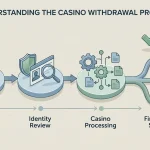
For a casino offering a Plinko game, the payment process is separate from the game itself. A Plinko casino is, in this context, an online casino where that game is available; the name does not establish which payment methods the operator supports or how quickly a withdrawal will arrive. Payment arrangements depend on the platform, so timings reported for one service should not be treated as a promise about another.
Open Banking and Faster Payments have made transfers to and from online casinos less cumbersome. These payment rails can reduce friction in moving funds, but that does not mean every casino uses them, or that a withdrawal is completed immediately. The payment method and the operator’s handling of a transaction both matter to the process.
A specialist casino review has reported that many platforms offer instant deposits and complete withdrawals within hours rather than days. This is a reported pattern, not a universal service standard. It does not establish that a particular casino with Plinko UK will process a withdrawal on that schedule, nor that every transaction through a platform will follow the same timing.
Fastest Payout Casinos in the UK: What It Means
The distinction between deposits and withdrawals is important. A deposit may be credited promptly while a withdrawal follows a different process and takes longer. The reported timing concerns withdrawals as well as deposits, but does not provide a basis for predicting the outcome of an individual payment. A stated speed should therefore be read as a description of a platform’s reported service, not as a guaranteed deadline.
For anyone comparing casinos with Plinko in the UK, payment claims are most useful when considered alongside the exact method offered and the terms attached to it. Open Banking and Faster Payments describe routes for transferring funds; neither confirms that a particular casino accepts them. Nor does the presence of a Plinko game determine the available withdrawal options. A claim about a Plinko casino withdrawal should therefore be understood as platform-specific unless its scope is clearly stated.
These distinctions keep the game label separate from the financial service. Plinko does not itself define deposit or withdrawal speed; those depend on the casino’s payment arrangements. A reported withdrawal time can describe some platforms without applying to every casino or every payment.
Crypto Payments at Casinos: What Is Established
Bitcoin, Ethereum and Litecoin are accepted by some alternative gambling platforms, alongside conventional payment options such as cards and e-wallets. This is a limited, platform-specific observation, not a description of every casino’s cashier. The payment methods available can differ between operators and may change over time.
Chicken Road Casino Game in the UK: What Is Verified
A specialist review reports that these cryptocurrencies are among the options offered by some such platforms. That does not establish that a particular Plinko game or casino accepts crypto. A game’s presence on a platform does not, by itself, show which payment methods are supported there; those are separate features.
The UK context also matters. Remote gambling operators serving Great Britain must hold a UKGC licence, while non GamStop sites operate outside that regulatory system. The presence of a cryptocurrency option should not be treated as evidence of UKGC authorisation. Nor does the use of a familiar coin establish what protections, account controls or dispute processes apply.
Conventional cards and e-wallets may appear alongside crypto in descriptions of alternative platforms, but the presence of a card option does not mean every card type is permitted for gambling. UK-licensed remote operators cannot accept credit-card payments for gambling, including through a money service business or a wallet funded with a credit card.
For a Plinko casino that mentions crypto, the relevant distinctions are therefore the operator’s regulatory status and the payment methods actually available on that platform. Bitcoin, Ethereum and Litecoin are reported options at some alternative platforms; they are not universal payment methods, and their availability does not establish that a particular Plinko casino accepts them.

Aviator Casino Game UK: Regulation and Evidence
The guide separates UKGC-authorised gambling in Great Britain from offshore access and reviews what can...

3-Reel Slots in the UK: Rules, Odds and Play
A guide to real-money stakes, free-play limits, slot features and the UK licensing context for...

5-Reel Slots in the UK: Features and Play
A clear guide to reel layout, game-specific rules, volatility, demo play and the limits of...

Bonus Buy Slots in the UK: How They Work
A bonus buy changes how a round begins; the game’s terms and bonus content still...

UK Online Casino Payouts: Keno Returns vs Speed
Keno return figures describe game outcomes over repeated play, while withdrawal processing is a separate...

UK Casino First Deposit Bonuses: How to Compare Terms
The advertised value alone is not enough: qualifying games and what happens when conditions are...

High-Volatility Slots in the UK: How Payouts Work
Volatility describes the balance between how often wins occur and their size, not when a...

Keno at UK Online Casinos: Terms and Game Play
Game rules, number picks, draw mechanics and house-edge estimates shape what can be concluded about...

Low-Volatility Slots in the UK: Returns and Risk
Low volatility describes how returns are distributed over play, not when a win will land...

Online slot payout percentages: what they mean
A payout percentage may describe a game, a group of games or broader results, so...

Progressive jackpot slots: how pools and wins work
A practical guide to pool funding, shared networks, eligibility, bonus limits and the trade-off between...

Best RTP Casino Slots in the UK: RTP Explained
RTP describes a slot’s theoretical long-run payout share, while volatility concerns the pattern of wins...

Video Slots in the UK: Returns, Rules and Play
Explore how slot rules, volatility and bonus features shape play, and why a short session...

Casino Dice Games in the UK: Formats and Sites
Dice-related labels can cover different game formats, while the titles available depend on each individual...

Chicken Road Casino Game in the UK: What Is Verified
The name and “slot” label alone do not confirm gameplay, availability, demo options or a...
Classic Slots Online in the UK: How They Work
A result depends on the symbols and positions that form a qualifying combination under the...

Crash Casino Games in the UK: Licensing and Offers
Understand how crash games fit into casino categories and what licensing, payment methods, demos and...

Fastest Payout Casinos in the UK: What It Means
Payout speed can describe different stages, from handling a withdrawal request to funds becoming available...

Fruit Machine Slots UK: How Online Games Work
See how digital fruit slots use RNGs, recreate familiar features and differ across real-money and...

Hi-Lo Casino UK: Rules, Live Play and Strategy
Hi-Lo outcomes depend on card rank, tie rules and whether a correct call builds a...

High-RTP Slots in the UK: What Can Be Verified
RTP, volatility, game features and UK rules each affect what slot comparisons can—and cannot—show. What...

JetX Casino Game in the UK: Format and Play
Explore how JetX is classified, what demo play can establish, and what to consider about...

Mines Casino Game in the UK: Rules and Licensing
Separate confirmed game information from claims about demos, bonuses and strategy, and understand the UK...

Online Bingo UK: Formats, Tickets and Slot Games
Ticket layouts, line prizes and full houses shape bingo play, while rooms, costs and slot...

Online Casino Games for Real Cash in the UK
A practical explanation of slot mechanics, casino checks, bonus conditions and how real-money payouts and...

Online casinos without ID in the UK: checks explained
A delayed document request is not the same as no verification: UK-licensed casinos must verify...

Penny Slot Machines UK: Stakes and Free Play
A practical guide to spin costs, free-play limits, bonus terms and checking published game details....

Progressive Slots Online in the UK: How Jackpots Work
See how connected wagers build jackpot pools and how progressive slots differ from games with...

UK Gambling Casino Sites and Slots: How to Assess Them
Understand what claims about fairness, returns, payments and bonuses mean, and how to compare them...